On the World of Lacquer: A Master’s Insight into the Uniqueness of Lacquer Painting
By Wang Heju | Category: Master Insights & Art Philosophy
1. An Eight-Millennium Lineage: The Cradle of World Lacquer Art
Recently, the Fuzhou Bodiless Lacquerware Industry Association sent over the proof of the upcoming book, The World of Lacquer: 70 Contemporary Lacquer Artists of Fuzhou, requesting a preface. Given my advanced age, limited energy, and the pressing timeline, I have adapted a previously written short essay to serve as this introduction.
Fuzhou’s bodiless lacquerware decoration technique is recognized as a world intangible cultural heritage. Archaeological evidence demonstrates that lacquerware was already present at the Hemudu Neolithic site in Yuyao, Zhejiang, over 8,000 years ago. This firmly establishes China as the undisputed cradle and origin of global lacquer art.
Fuzhou lacquerware enjoys global renown for its sheer variety, technical mastery, and generations of celebrated maestros. It stands as a sacred pilgrimage site for lacquer artists across China and the world. The decorative techniques of Fuzhou bodiless lacquerware are the ultimate representation of Chinese lacquer culture—a heritage that fully deserves its international acclaim.
2. Lacquerware and Lacquer Painting: A Miracle of Civilizational Continuity
For eight millennia, Chinese lacquer culture has used lacquerware as its physical vehicle. In essence, lacquerware is the ancestral root of modern lacquer painting.
The renowned scholar Guo Morojo once passionately praised the radiant Bronze Age. Yet, while the ancient and magnificent bronze cultures of the Xia, Shang, and Zhou dynasties have long since vanished from practical survival, lacquer culture—which predates bronze by millennia—has continuously evolved, unbroken, to this very day. This is nothing short of a miracle in human civilization.
Although contemporary lacquer painting as a distinct fine art medium has only emerged over the last few decades, its foundation rests upon 8,000 years of accumulated technical mastery. How can we not revere such a monumental history?
3. The Core of Art: “Xie-Yi” (Expressionism) and “The Uniqueness”
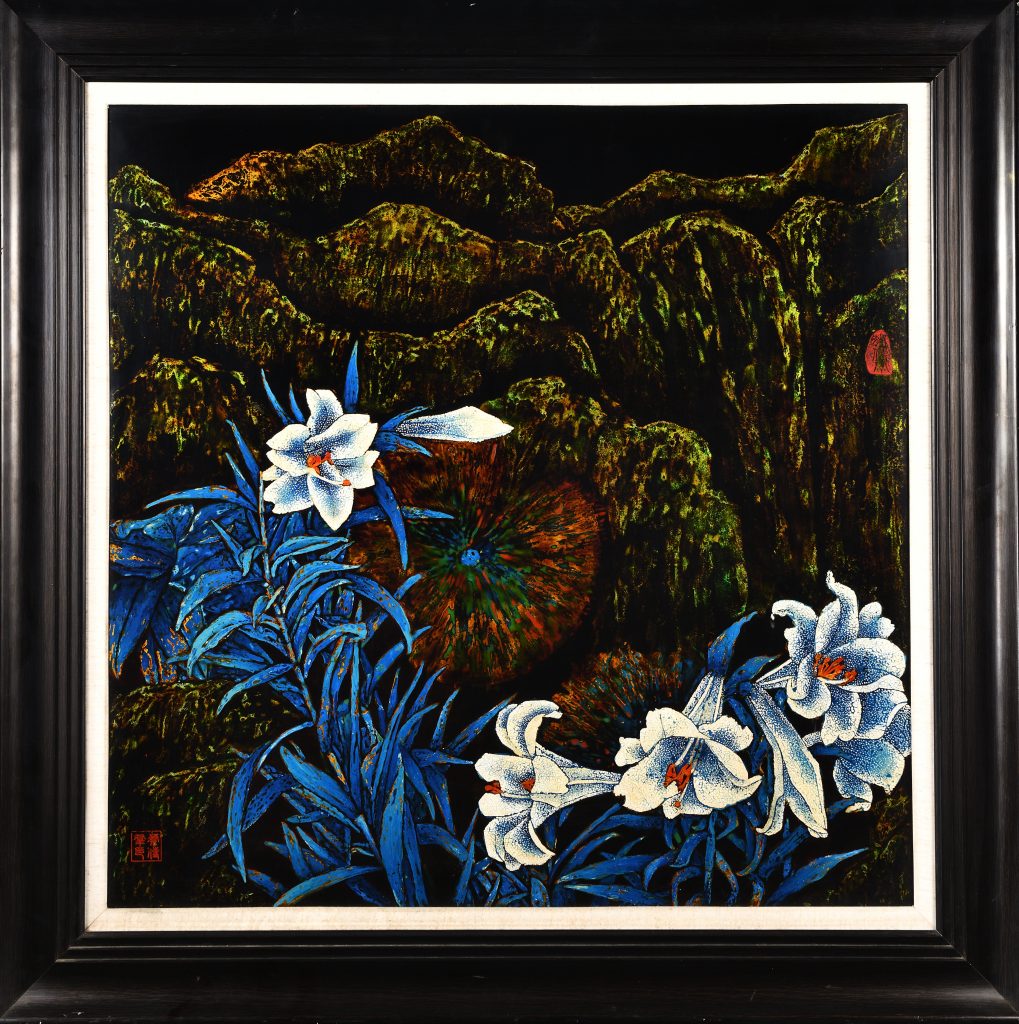
In my own lacquer painting creation, I have always prioritized four core pillars: literary depth, emotional expression, Xie-Yi (freehand expressionism), and uniqueness. In my early works such as The Nine Songs (九歌), The Army Cart (兵车行), and The Battle of Red Cliffs (火烧赤壁), their literary narrative and expressive spirit are immediately visible to the observer. For both the artist and the audience, this deep aesthetic resonance comes from a life of reading. Regrettably, the majority of professional art students in academies today lack a passion for reading.
As for “uniqueness,” it challenges the very raison d’être of a painting or an entire artistic medium. Many lacquer painters today seem to lack awareness of this, resulting in annual exhibitions flooded with works that merely mimic the textures and visual effects of oil paintings.
Every artistic medium must rely on its specific, proprietary materials and tools to forge irreplaceable aesthetic outcomes. This is the individuality of a medium—what I call its “uniqueness.” An artist’s caliber depends not only on their cultural education and structural rendering skills, but fundamentally on the depth of their comprehension regarding the specific medium they handle. Generally speaking, Western art mediums excel at realism and representational accuracy (Xie-Shi), whereas Eastern mediums—such as ink and natural lacquer—excel at expressionism and the freehand spirit (Xie-Yi).
Consider ink: the moment it touches Xuan paper, it bleeds and diffuses immediately, making rigid, precise anatomical modeling difficult. Yet, under the brush of a grandmaster who turns this natural behavior to their advantage, this very bleeding becomes the poetic soul and sublime charm of the artwork—a visual beauty that cannot be replicated by any other material. This is the absolute uniqueness of traditional Chinese painting.
4. The Material Soul: Defending True Lacquer Art
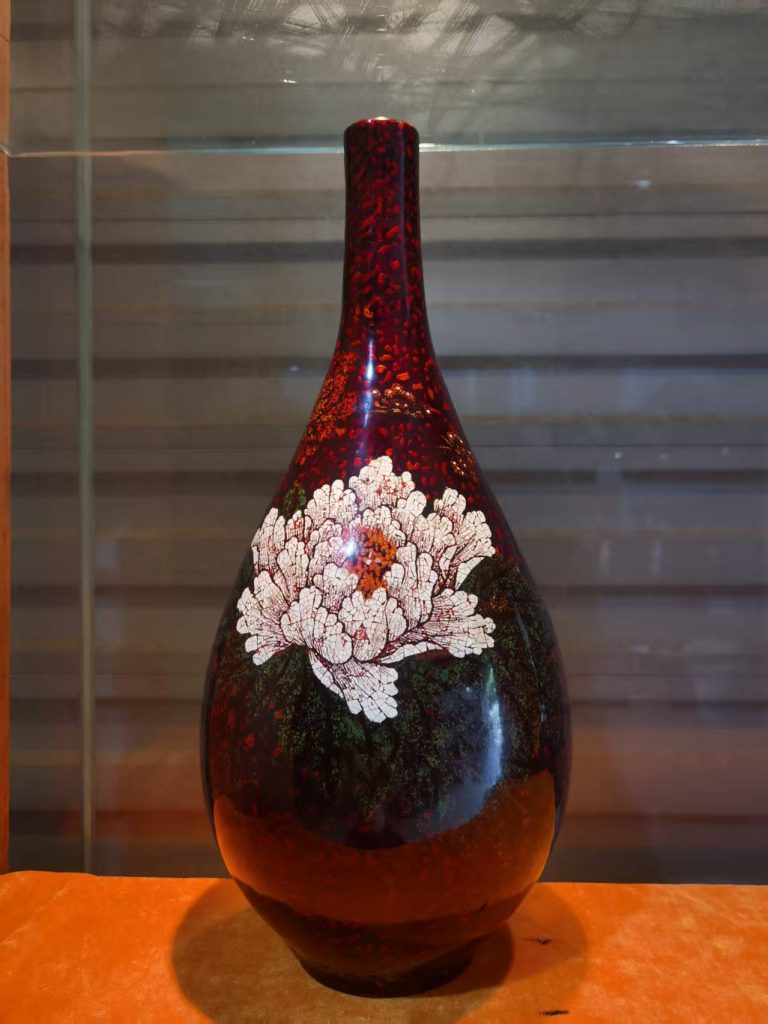
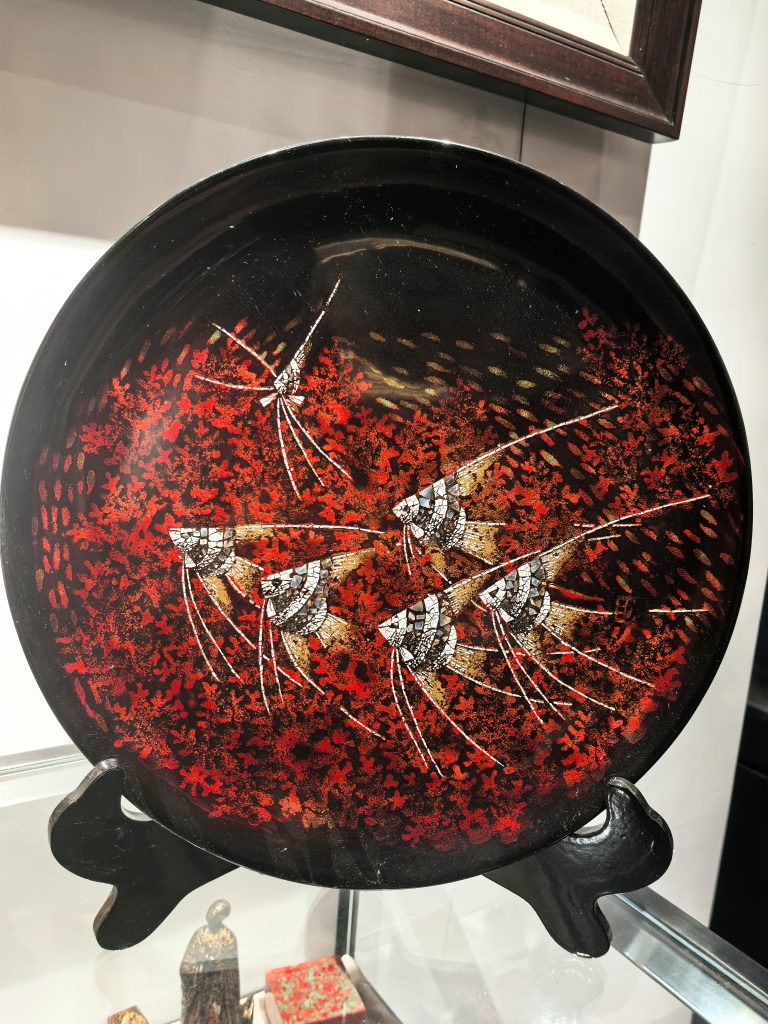
Lacquer painting is inherently an Eastern art, and its supreme advantage lies in its capacity for Xie-Yi (expressionism). The materials used in authentic lacquer painting—black lacquer, clear lacquer, gold, silver, and mother-of-pearl (Raden) inlay—possess an elite, profound material beauty. They radiate splendor, yet remain ancient, restrained, and multi-faceted, exuding an indescribable sense of historical weight and mysticism.
What is this historical mysticism? I define it as a scent of antiquity, a sensory distance from the mundane reality of the modern world—a pure “beauty born of distance.” The physical medium of lacquer offers infinite possibilities and creative space to express this unique atmosphere. Since the emergence of modern lacquer painting in the 20th century, all classic masterpieces have carried this defining trait.
Today, while the ranks of lacquer painters have undoubtedly expanded, those who truly comprehend the “uniqueness” of the medium remain a minority. Many so-called “lacquer paintings” are actually created using lacquer merely to tint a surface, resulting in an aesthetic and physical finish that could easily be replaced by non-lacquer materials. Some even look better, cost less, and save far more time if executed in oil pigments or watercolors.
To spend immense, exhausting labor on something that can be easily replaced by synthetic paint is an unwise pursuit. When the true medium is abandoned, the historical depth, noble premium quality, and mystical aura of lacquer art vanish completely. This is why preserving the “uniqueness” of lacquer painting is paramount.
5. Artistry and Stewardship: Supporting the Craftsmen
It is disheartening that after years of intensive study in professional art academies, very few students stick with the grueling path of lacquerwork. Modern short-term training workshops and advanced research seminars yield little practical efficacy.
When it comes to awards and professional titles, why are they so often granted only to those who paint the final surface? I believe the share of awards given to painters should be limited to no more than half. The artisans responsible for all other foundational lacquer crafts—such as bodiless core shaping (Tuo-Tai), base-priming (Di-Di), and wood-carving structures—must be included in these honors.
We must establish a benchmark of respect that offers these foundational craftsmen visibility, confidence, honor, and financial reward. Only then will the specialized sub-crafts of lacquer art find successors for the next generation.
Base-priming (Di-Di) and surface decoration (Xi-Shi) form a single, inseparable, organic lifecycle. Without a meticulously crafted base-prime, the exquisite surface decoration becomes nothing more than a castle in the sky. Therefore, improving the compensation of artisans engaged in foundational lacquerwork, awarding them appropriate professional titles, and retaining true talent are the most urgent, critical challenges facing our industry today.
The publication of this book coincides with the 70th anniversary of the founding of the People’s Republic of China. It is my sincere hope that this volume will inspire more people to understand lacquer culture, and encourage wider public support to propel the Fuzhou lacquer art industry forward. This, I believe, is the true purpose and significance of this book.