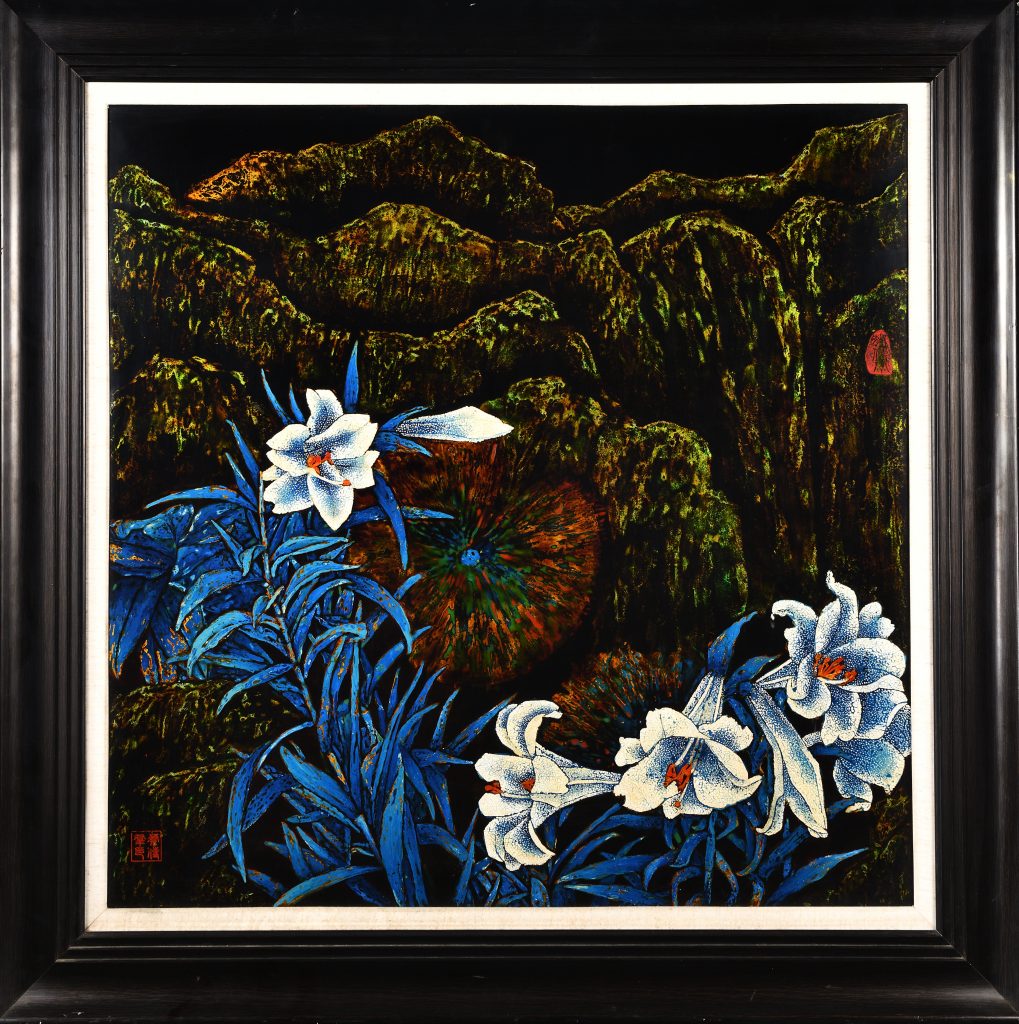
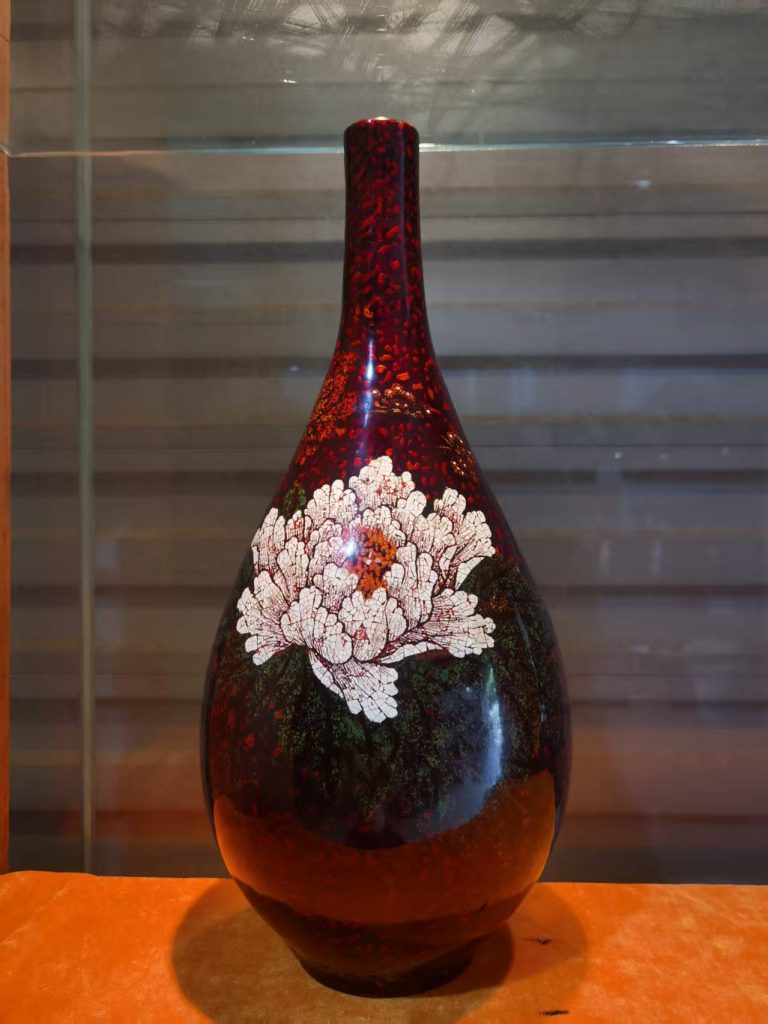
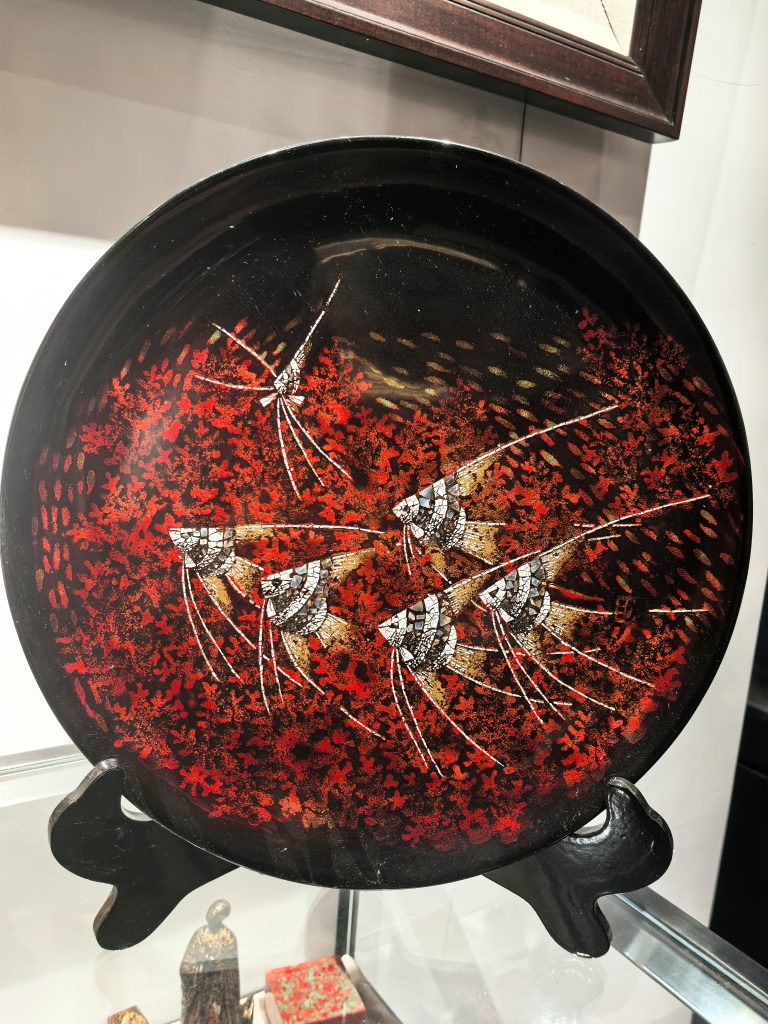
1. The Heritage: A Legacy Spanning Eight Millennia
Natural lacquer, known as Urushi (大漆), is one of the earliest natural coatings discovered by humanity, with a history in China stretching back over 8,000 years. By the Southern Song Dynasty, Fuzhou had already established officially sanctioned lacquer workshops. Later, during the Ming Dynasty, the historical text Gegu Yaolun (格古要论) praised a distinctive carved lacquerware from Fuzhou known as “Fu-Xi” (福犀), describing it as remarkably “durable yet thin, and exceptionally rare.”
The pivotal turning point for modern lacquer art arrived during the Qianlong period of the Qing Dynasty. A master artisan named Shen Shaoan noticed an old plaque at a local temple; while the wooden core had completely rotted away, the outer layers of hemp cloth and lacquer remained structurally sound and extraordinarily lightweight.
Inspired by this discovery, Shen reverse-engineered the long-lost Jia-Zhu (夹纻) technique, creating what we now celebrate as Fuzhou Bodiless Lacquerware (脱胎漆器). This breakthrough elevated Fuzhou lacquerware to be ranked alongside Beijing Cloisonné and Jingdezhen Porcelain as the “Three Treasures of Chinese Fine Arts.” In 2006, the meticulous decorative techniques of Fuzhou Bodiless Lacquerware were officially recognized as a National Intangible Cultural Heritage.
2. The Craft: The Alchemy of Patience and Nature
True lacquer is an incredibly precious gift from nature; a single lacquer tree yields only about 10 kilograms of raw sap over its entire lifespan. Beyond its aesthetic appeal, raw lacquer possesses natural antibacterial, insect-resistant, and anti-corrosive properties. Before the invention of modern chemical synthetic coatings, it served as nature’s most perfect protective layer.
The creation of Fuzhou Bodiless Lacquerware is a masterclass in ancient materials science:
- The Bodiless Technique (脱胎): Artisans first sculpt a temporary core out of clay or plaster. Layers of hemp fabric are then meticulously wrapped around the mold, sealed step-by-step with lacquer. Once the composite structure hardens completely, the inner clay core is broken down and washed away. What remains is a hollow piece made entirely of lacquer and linen—lighter than wood and structurally more resilient than ceramic.
- Impervious to Time: A finished piece of bodiless lacquerware is so lightweight that it floats effortlessly on water, yet it is resistant to acids, alkalis, high temperatures, fading, and warping. It survives centuries, retaining its brilliant luster.
- The Human Touch: Fuzhou lacquer art entirely resists automation; every step must be guided by human hands. From raw material selection, molding, and fabric lining, to coating, repeated sanding, and final ornamentation, a single piece demands dozens—and sometimes hundreds—of steps.
Because lacquer can only dry in a strictly controlled environment with specific temperature and humidity levels, each layer must cure naturally before the next is applied. A standard piece takes two to three months to complete, while a true masterpiece can require up to a year.
During the definitive “Push-Polishing” (推光) stage, the artisan uses their bare palm, dipped in organic plant oils and microscopic mineral ash, to polish the surface thousands of times. This direct hand-to-object friction is what gives the lacquer its signature mirror-like, jade-soft finish.
3. The Encounter: More Than Just an Object
When you run your fingers along a piece of authentic lacquer art, you are not touching synthetic plastic or a cold chemical coating.
Instead, you are connecting with 8,000 years of collective human ingenuity, months of unyielding patience, and the profound, silent gift of a lacquer tree. It is an art form that refuses to rush, crafted for those who truly appreciate the luxury of time.