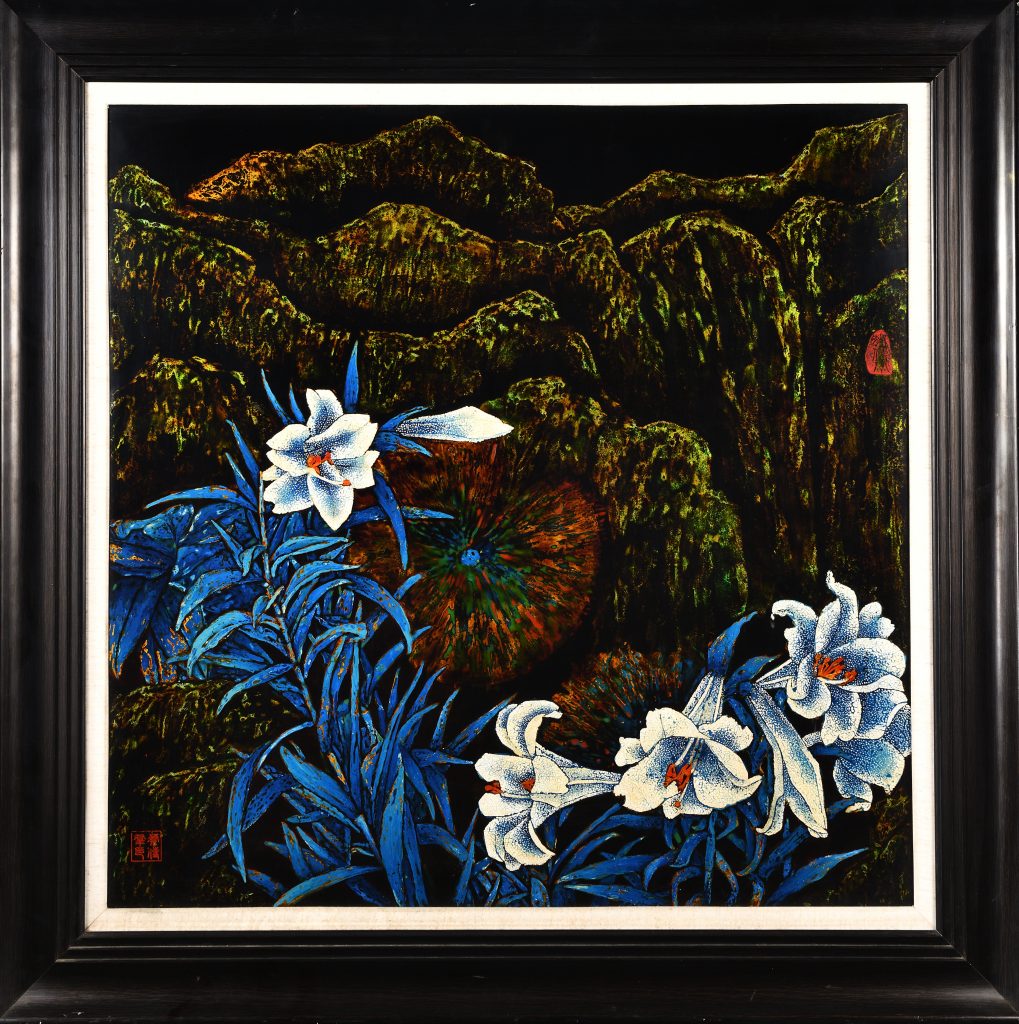
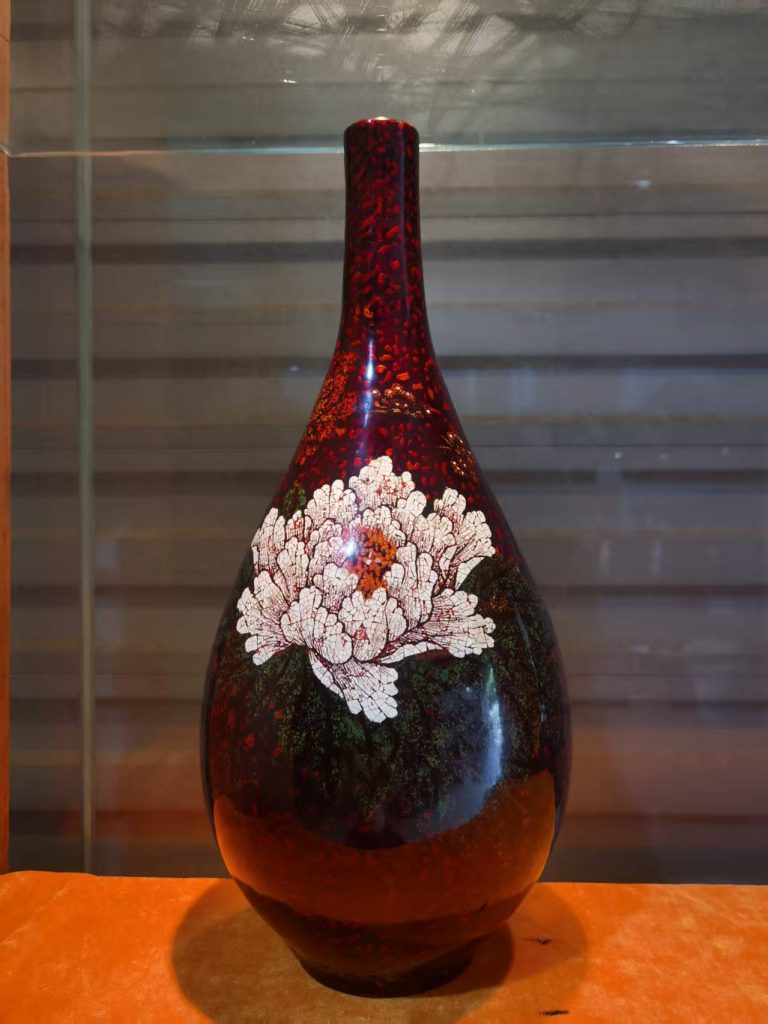
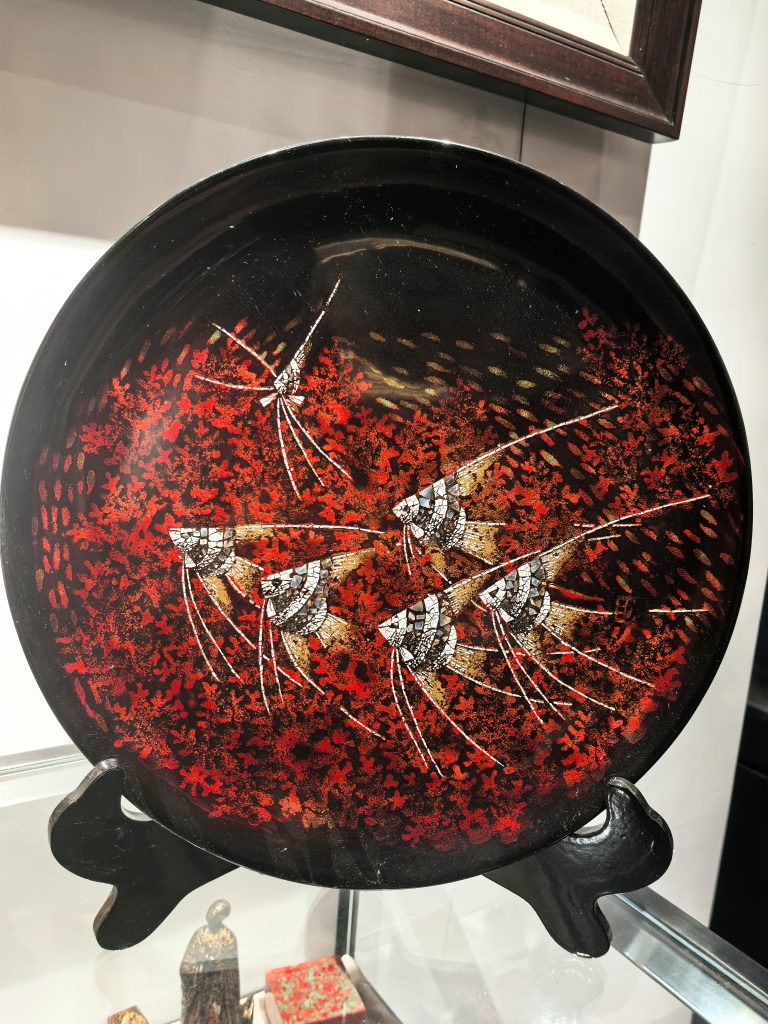
Fuzhou Bodiless Lacquerware: Historical Evolution and Craftsmanship Analysis
By Associate Professor Wei Ning | Category: Deep Craftsmanship & Technical Analysis
1. Introduction: The Ancient Lineage of the “Bodiless” Technique
The bodiless technique in Fuzhou lacquerware is historically referred to as Kuang-Chang (纻纻) craft, or alternatively known as Jia-Zhu (夹纻) or An-Zhu (按纻). It is a time-honored methodology for constructing three-dimensional lacquer forms, predominantly utilized in ancient times for crafting sacred Buddhist statues.
The core composite relies entirely on raw natural lacquer and organic hemp fabric. The foundational steps involve sculpting a preliminary core out of clay, layer by layer, matching the desired dimensions. Hemp cloth is then tightly wrapped and saturated with raw lacquer over this base. Once the composite lacquer-and-fabric layers cure completely, the internal clay core is excavated and removed, leaving behind a perfectly hollow, structurally independent canvas of lacquer and cloth.
The earliest textual records tracking the utilization of natural lacquer appear in the ancient text Han Feizi: Ten Faults (韩非子·十过). It chronicles that during the remote era of Shun and Yu, artisans cut down timber from mountains, shaving and carving it into delicate ceremonial wares, subsequently sealing them with flowing lacquer… Yu elevated these into sacrificial vessels, applying a deep black lacquer to the exterior and a vibrant cinnabar red (Shu-Zhi) to the interior. This evidence underscores that the utilization of lacquer spans a massive civilizational timeline, with further early historical references documented in the classic Book of Poetry (Shu Jing).

2. Historical Roots: From Warring States Utilities to Imperial Status
The precise chronological emergence of the Jia-Zhu (夹纻) technique lacks definitive textual consensus, yet archaeological excavations strongly suggest its origins date back to the Warring States period, flourishing through the Western Han, Wei, and Jin dynasties before reaching technical maturity during the Tang Dynasty.
The esteemed Tang Dynasty scholar Zhang Wu registered in his work Chaoye Qianzai (朝野佥载), Volume 5: “Among them was a massive Buddha statue standing nine hundred feet tall, with a nose as broad as a small boat and a pinky finger capable of accommodating dozens of people standing side-by-side. It was crafted entirely via the Jia-Zhu (夹纻) lacquer method.” Furthermore, the mid-Tang poet Wang Renyu recorded in his Yutang Xianhua (玉堂闲话): “I once toured the Xinzhou Xinguo Temple and witnessed three imperial-level statues crafted during the Xuanzong era via the Jia-Zhu technique, executed with unparalleled mastery.”
During the Warring States period, this technique was primarily harnessed for utilitarian household vessels, mostly featuring geometric circular or square profiles. These early iterations frequently featured a permanent solid wooden core wrapped in hemp fabric rather than a removable clay mold. Notable early Han Dynasty lacquer artifacts excavated from Lelang (modern Korean Peninsula) fall squarely into this structural category.
By the Six Dynasties period, as Buddhism traveled from India into China, the traditional Indian religious ritual of “Statue Processions” (Xing-Xiang) accompanied this migration. This ceremonial ritual involved placing sacred statues on elaborate floats to parade through streets during major festivals. To ensure these grand statues could be easily transported, the Jia-Zhu bodiless technique was widely adopted for Buddhist sculpture.
By the Southern and Northern Dynasties, the structural scale of these processed statues grew exponentially, turning Jia-Zhu into the premier medium for temple sculpture due to its lightweight agility and structural integrity. This golden era caused the art to flourish inside grand monasteries, with records noting that many monastic statues across the country utilized this lightweight fabric-and-lacquer core system instead of solid wood.

3. The Fuzhou Resurgence: The Breakthrough of Master Shen Shaoan
During the Southern Song Dynasty, Fuzhou’s regional lacquerware production reached a massive zenith. In 1975, an archaeological excavation at a Southern Song tomb in Fuzhou’s northern suburbs unearthed a spectacular cache of 17 authentic lacquer pieces, including lacquer plates, cosmetics boxes, rulers, and silver-lined plates, constructed using both Jia-Zhu and solid wood cores. Among them, a bi-color lacquer plate featured three layers of overlapping cloud motifs engraved on the outer wall, revealing a rich dark brown base lacquer.
By the Ming and Qing dynasties, Fuzhou had cemented its global reputation for lacquer craftsmanship. This legacy set the stage for the legendary master artisan Shen Shaoan (1767–1835), courtesy name Zhongkang, who lived during the Qianlong and Jiaqing eras. A native of Houguan County (modern-day Fuzhou), Shen was a brilliant lacquer artisan whose early life was dedicated to crafting everyday lacquer items to sustain his livelihood.
Historical lore chronicles that while working on repairs at a local temple in Fuzhou, Shen inspected an ancient, weathered plaque. He discovered that while the interior wooden core had completely rotted away into dust, the underlying hemp fabric and raw lacquer lining remained pristine, rock-hard, and completely untouched by decay.
Deeply inspired, Shen returned to his workshop to experiment. He revived the ancient, lost Jia-Zhu technique, refining it by replacing the coarse linen of the past with a ultra-fine silk and fine network fabrics. He combined this with raw natural lacquer and precise mineral formulas to create a vastly superior, bulletproof composite matrix.
This advanced engineering drastically reduced the structural weight of the vessels while increasing their tensile strength and elasticity, giving birth to the legendary modern Fuzhou Bodiless Lacquerware. During the fourth year of the Guangxu reign, imperial officials selected a premium assortment of Shen Shaoan’s creations to present to the Imperial Palace, where Empress Dowager Cixi expressed boundless admiration, officially appointing the Shen family as imperial purveyors.
4. Technical Analysis: The 4 Critical Sequences of Production
The traditional manufacturing sequence of Fuzhou Bodiless Lacquerware is an intensive discipline that can be organized into four overarching, meticulous phases:
4.1 Core Sculpting and Molding (Plasticity)
Artisans primarily utilize two engineering approaches for temporary core preparation: plaster molding or traditional clay modeling. In the plaster method, a negative mold is cast and allowed to dry completely. A specialized releasing agent—such as a specific liquid mixture of soap and kerosene, or diluted clay slurry—is applied uniformly to the inner surface of the mold before the fabric layout begins.
4.2 Fabric Inlay and Lacquer Satiation (The Matrix)
Artisans prepare an all-natural adhesive putty by blending raw lacquer with pulverized organic fillers (such as wheat flour, fine mineral powder, or premium bone ash). This precise paste serves as the structural binding agent.
Artisans lay strips of fine hemp cloth or delicate silk over the core mold, applying the lacquer putty over each layer to achieve complete saturation. Once a layer cures, the process is repeated, applying up to dozens of microscopic layers depending on the required thickness of the piece. After the final fabric layer dries fully, a specialized fine-grade putty is applied to fill the surface pores of the linen, ensuring a glass-smooth surface.
4.3 Clay Evacuation and Core Stripping (The Liberation)
Next, the composite enters the base-priming stage. Depending on the vessel’s engineering, different grades of raw volcanic ash, fine shale powder, or iron-rich clay putties are sequentially layered, transitioning from coarse, medium, to ultra-fine particles, until the surface becomes entirely uniform.
Once the putty completely cures, the raw piece is immersed in water or treated with heat to dissolve the temporary internal core, enabling clean manual extraction of the clay or plaster. The hollow fabric-and-lacquer shell is then thoroughly rinsed and stabilized. If the mold was divided into split-sections during fabrication, the pieces are carefully assembled using high-tensile paper tape and reinforced from the interior using fresh hemp strips saturated with raw lacquer.
4.4 Surface Ornamentation and Push-Polishing (The Luster)
The piece enters the final decorative cycle. For monochromatic minimalism (Su-Qi), premium clear lacquer tinted with pure organic pigments is applied to the satin surface, requiring two to three iterations of microscopic coating, controlled drying, wet-sanding, and hand-polishing. If advanced decorative arts are demanded—such as Xi-Shi (surface painting), Cai-Qi (polychrome lacquer), gold-leafing, or mother-of-pearl inlay—the master artisan executes these details directly over the surface before entering the definitive finish.
The final brilliance relies on the legendary “Push-Polishing” discipline. The artisan uses their bare palm, dipped in fine plant oils and microscopic abrasives, to polish the lacquer thousands of times. This direct hand-to-object friction removes any microscopic surface imperfections, bringing out a warm, mirror-like luster that feels like soft jade to the touch.
5. Epilogue: A Modern Renaissance for an Unbroken Legacy
Fuzhou Bodiless Lacquerware is celebrated globally for its miraculous characteristics: it is astonishingly lightweight, highly resilient, intensely brilliant in color, impervious to water, resistant to warping, and entirely proof against high temperatures, acids, and alkalis.
In 2006, Fuzhou Bodiless Lacquerware Decoration Techniques were inscribed onto the inaugural list of China’s National Intangible Cultural Heritage. Later, on December 31, 2010, the General Administration of Quality Supervision, Inspection, and Quarantine officially approved the “Fuzhou Bodiless Lacquerware” Geographical Indication (GI) protection status.
These strategic measures ensure that the authentic lineage of Fuzhou lacquerware remains fiercely guarded, consistently elevating this 8,000-year-old Chinese wisdom to new heights on the global luxury stage.